


King
Administrator
- Joined
- Jul 12, 2021
- Messages
- 25,005
- Reaction score
- 5
- Points
- 38
English | 2018 | ISBN: 0190495618, 0197533345 | 248 pages | EPUB | 6.6 MB
Education has long been a cornerstone of Chinese culture. Traditional Chinese norms have also held that the less education and exposure to influence from outside the home a girl had, the more likely she would be to remain true to conventional domestic values and to remain morally upright. In the mid-nineteenth century, overseas Chinese communities encountered a new perspective via Western European and American missionary schools. Formal education could be not just helpful but integral to preserving female virtue and had the added benefit of elevating the socio-cultural status of the overseas Chinese. As a result, increasing numbers of girls began to attend school. Within a few decades, other groups who sponsored female education-local Chinese community leaders, mainland Chinese reformists, the British colonial government-were offering a competing approach: education for the sake of modernization. These diverse and sometimes divergent priorities preoccupied educators, parents,
politicians, and, of course, the girls and women who attended these institutions.
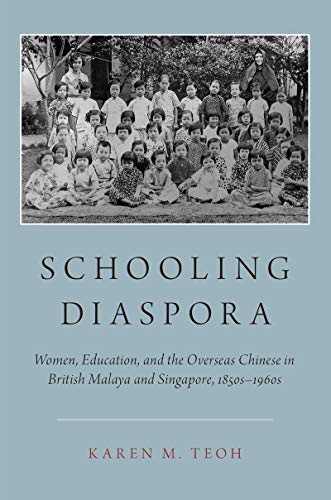
In this work, Karen Teoh relates the history of English and Chinese girls' schools that overseas Chinese founded and attended from the 1850s to the 1960s in British Malaya and Singapore. She examines the strategies of missionaries, colonial authorities, and Chinese reformists and revolutionaries for educating girls, as well as the impact that this education had on identity formation among overseas Chinese women and larger society. Such schools ranged from charitable missions operated by nuns who rescued orphans and prostitutes, to elite institutions for the daughters of the wealthy and powerful. They could tailor their curricula to suit the specific needs of female students, emphasizing domestic skills such as sewing and cooking, or, later...
Read more
Continue reading...