


King
Administrator
- Joined
- Jul 12, 2021
- Messages
- 25,005
- Reaction score
- 5
- Points
- 38
Published 11/2022
MP4 | Video: h264, 1280x720 | Audio: AAC, 44.1 KHz
Language: English | Size: 1.84 GB | Duration: 1h 27m
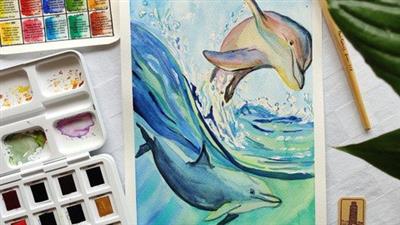
Learn to paint beautiful seascape with drops of water
What you'll learn
how to draw the dolphins in pencil
how to apply reserving fluid
how to work with wet-on-wet technique
how to work with wet-on-wet technique
learn how the highlight of dolphins work under the water and above water
Requirements
the course is perfect for intermediate level, but beginners can give it a try as I guide through the whole process
watercolour paper 200 gsm or more
watercolour paints, I use 36 White nights pans, you can use your pallette
watercolour paintbrushes (flat for washing the paper, big round for the base, thin round brush for details)
tissues
hairdryer
washi tape
plain water
Description
This course is about learning 2 main techniques in watercolours. You will learn how to draw dolphins, how to use fluid mask and then how paint water, and dolphins in the movement.During this class you will learn:- how to draw the dolphins in pencil - this step is important as it will guide you throughout the whole process from applying fluid mask, till painting water and dolphins- how to apply the masking fluid, and why we use it in our works - Reserving fluid is a kind of rubber glue that can be used to cover individual parts of the paper. This layer will keep the surface free of paint, even if you paint with a lot of water. Masking fluid can be used when you need a clear boundary between the background and elements on it, or when you need to place small light details on a dark or colored background.Since the masking fluid resembles a rubber glue in its texture, it sticks together the pile. I advise you to moisten the brush before starting work and run it several times over the bar of soap so that it forms a protective layer. After that, you can...
Read more
Continue reading...